If you have ever typed “how long does SEO take” into Google at 11 PM while staring at your analytics dashboard, you are not alone. It is one of the most common questions clients ask before they even sign a contract, and honestly, it is a fair question. You are investing money and time, and you want to know when you will start seeing something back.
In this article, we will give you a real, honest answer, not the vague “it depends” that most agencies throw around without explaining what it actually depends on. We will walk you through a month-by-month timeline, share a real client example, and explain why SEO takes the time it takes.
Why Everyone Asks This Question
Setting the Right Expectations Before Starting SEO
SEO is one of the few marketing channels where you do not get instant feedback. Run a Google Ads campaign and you can see clicks within minutes. Post on Instagram and you get likes within hours. But SEO works differently, Google needs time to crawl your site, understand your content, compare it against competitors, and slowly build trust in your domain.
Most business owners come from a paid marketing background, where results are immediate. So when they move into SEO, the natural question is: “Okay, but when will I actually see something happen?” Setting the right expectation early saves a lot of frustration later, both for the client and the agency. That is exactly what this article is meant to do.
The Honest Answer, It Depends on These Factors
There is no single number that applies to every website. A brand-new website in a highly competitive industry will take much longer than an established website in a low-competition niche. Here are the main factors that decide your timeline.
Website Age and Domain Authority
Google tends to trust older domains more than newly registered ones, simply because they have a track record. A five-year-old website with some existing backlinks and content will usually start seeing movement faster than a website that went live last month. This does not mean a new website cannot rank, it just means it needs more consistent work before Google starts trusting it.
Competition Level in Your Industry
If you are trying to rank for “best restaurant in Hyderabad,” you are competing against hundreds of established food blogs, directories, and big brands. That will naturally take longer. But if you are targeting a specific, less competitive keyword like “biryani home delivery Banjara Hills,” you can realistically rank much faster because fewer sites are actively competing for that exact phrase.
Current Technical Health of the Site
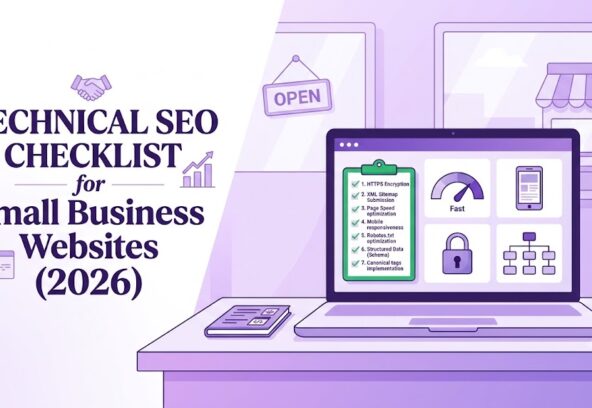
Before any content or backlink work can show results, the website itself needs to be technically sound. Slow loading speed, broken links, missing meta tags, poor mobile experience, and duplicate content can all hold back rankings, no matter how good your content is. If your website has serious technical issues, expect the first month or two to go into fixing the foundation before you see any ranking movement at all.
Content Quality and Consistency
Publishing one blog post and expecting it to change your rankings is not realistic. Google rewards websites that consistently publish helpful, well-structured content over time. A website publishing two to four quality articles a month will typically see faster and more stable growth than one publishing sporadically.
Local vs National SEO
Local SEO, ranking for searches tied to a specific city or area, generally moves faster than national SEO. This is because the competition pool is smaller. If you are optimizing a Google Business Profile and targeting “SEO agency Madhapur” instead of just “SEO agency India,” you are competing with a much smaller group of businesses, which means quicker visibility.
Month-by-Month SEO Timeline (What Actually Happens)
Let’s break this down into a realistic timeline based on what typically happens when SEO work begins on a reasonably healthy website.
Month 1–2: Audit, Fixes, and Foundation Work
The first month is rarely about rankings, it is about groundwork. This includes a full technical audit, fixing crawl errors, improving page speed, setting up proper meta titles and descriptions, structuring the website with clear headings, and claiming or optimizing the Google Business Profile if it is a local business. You likely will not see major ranking changes yet, but this is the most important phase because everything else depends on it.
Month 3–4: Early Ranking Movement for Low-Competition Keywords
This is usually when clients start getting excited. Low-competition, long-tail keywords, the specific, less-searched phrases, start appearing on page two or page one of Google. You might not be ranking for your biggest, most competitive keyword yet, but smaller wins start showing up, and Search Console data starts looking more active with impressions increasing.
Month 5–6: Noticeable Traffic and Lead Growth
By this stage, if the technical foundation was solid and content has been consistent, most websites start seeing a real, noticeable increase in organic traffic. Some of the mid-competition keywords start ranking on page one, and business owners typically start getting inquiries that mention “I found you on Google” instead of only referrals or ads.
Month 6+: Compounding Results and Authority Building
This is where SEO starts to feel different from paid ads, the results compound. Older content keeps ranking and bringing in traffic without any extra spend, and new content ranks faster because the website now has more authority in Google’s eyes. Many businesses see their strongest SEO growth between months 6 and 12, not in the first few months.
Real Example (Client Case Study)
We worked with a local business in Hyderabad on a structured 6-month SEO plan focused on local search visibility, Google Business Profile optimization, and consistent content publishing. In the first two months, the focus was almost entirely on fixing technical issues and setting up the Google Business Profile correctly, categories, service areas, photos, and regular posts.
By month three, we started seeing the business appear in the local map pack for specific service-related searches. By month five, organic traffic from Google had grown meaningfully compared to when we started, and the business began receiving direct calls and website inquiries from people who found them through search rather than paid ads. The biggest jump did not happen in month one, it happened gradually, and it kept growing even after we stopped actively promoting individual pieces of content, because the groundwork was already in place.
Why SEO Is Slower Than Paid Ads (And Why That’s a Good Thing)
Comparing SEO’s Long-Term ROI vs Google Ads’ Instant But Temporary Results
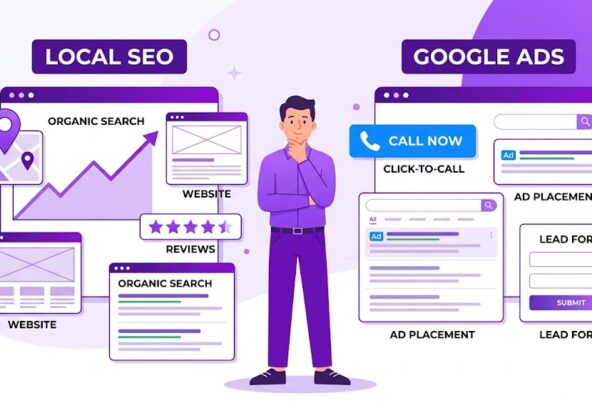
Google Ads can get you to the top of the search results page within minutes of launching a campaign. That instant visibility is powerful, especially for time-sensitive offers or new product launches. But the moment you stop paying, that visibility disappears completely. Your ranking, your traffic, your leads, all of it stops the day your budget runs out.
SEO works in reverse. It takes longer to build, but once a page ranks well, it can continue bringing in traffic for months or years with minimal ongoing cost. Think of paid ads as renting your visibility and SEO as owning it. Most successful businesses eventually use both, ads for immediate results and SEO for sustainable, long-term growth that does not disappear the moment you pause spending.
How to Speed Up SEO Results (Without Shortcuts)
While there is no way to trick Google into ranking a site overnight, there are ways to genuinely speed up the process without resorting to risky shortcuts that can get a site penalized.
Technical SEO Fixes First
Always start with the technical foundation. A fast, mobile-friendly, well-structured website gives every other SEO effort a better chance of working. Skipping this step and going straight to content or backlinks is like decorating a house before fixing its foundation.
Consistent Content Publishing
Publishing regularly, even if it is just two well-researched articles a month, sends a strong signal to Google that the website is active and continuously providing value. Consistency matters more than volume.
Quality Backlinks
Getting mentioned or linked to from other reputable, relevant websites helps build trust with Google faster. This does not mean buying random links, it means genuinely useful content that other sites want to reference, or partnerships with relevant local businesses and directories.
Local SEO Signals (Google Business Profile, Reviews)
For local businesses, an optimized Google Business Profile with accurate information, regular posts, and genuine customer reviews can speed up local visibility significantly faster than website SEO alone. This is often the quickest win for businesses that serve a specific city or area.
FAQs
Can SEO show results in 1 month?
It is possible to see very early signs, like improved crawl rates or small keyword movements, within the first month. But meaningful traffic and lead growth typically take at least three to four months, even with strong execution.
Why is my SEO not working after 3 months?
This usually points to one of a few issues, unresolved technical problems, inconsistent content publishing, targeting keywords that are too competitive for the website’s current authority, or simply needing more time. A quick audit can usually identify the exact cause.
Does more content mean faster SEO results?
Not necessarily. Publishing more low-quality content will not speed things up and can sometimes hurt more than help. Consistent, well-researched, genuinely useful content published on a steady schedule works far better than a large volume of rushed articles.
Conclusion
SEO is not instant, and anyone who promises overnight rankings is either exaggerating or setting you up for disappointment. But when it is done right, starting with a solid technical foundation, followed by consistent content and genuine local signals, the results are more stable and long-lasting than almost any other marketing channel.
If you want a realistic, honest assessment of how long SEO will take for your specific website and industry, Purple Cloud’s SEO team can walk you through a free audit and give you a timeline based on your actual starting point, not a generic estimate.